
Moon Cycle Intention Setting Guide for Women
You've probably felt it—that pull toward something bigger than your daily to-do list. A rhythm that whispers you're part of something ancient and cyclical. That's the moon calling you back to your awareness.
If you're ready to explore intention setting aligned with the natural cycles of lunar phases, this moon cycle intention setting guide is for you. Working with the moon phases offers a structured framework that helps you organize your goals, reflect on what you want to release, and track your progress through eight distinct phases.
Related: Moon Cycle Journaling for Women: A Complete Guide
Related: Best Intention Setting with Lunar Phases: A Beginner's Guide
Related: Moon Phase Intention Setting Rituals: A Beginner's Guide
The moon simply cycles. When you align your intentions with those cycles, you create a natural rhythm for your goal-setting practice. Let's walk through how to make that happen.
In this article
- Understanding the 8 Moon Phases for Intention Setting
- The Critical First Step: Setting Your New Moon Intentions
- Full Moon Ritual: Review, Reflect, and Release
- Creating Your Personalized Lunar Ritual Practice
- Using Moon Phases as Natural Organizational Tools
- Building Your Moon Cycle Intention Kit
- Making Moon Cycle Intention Setting Your Sustainable Practice
Understanding the 8 Moon Phases for Intention Setting
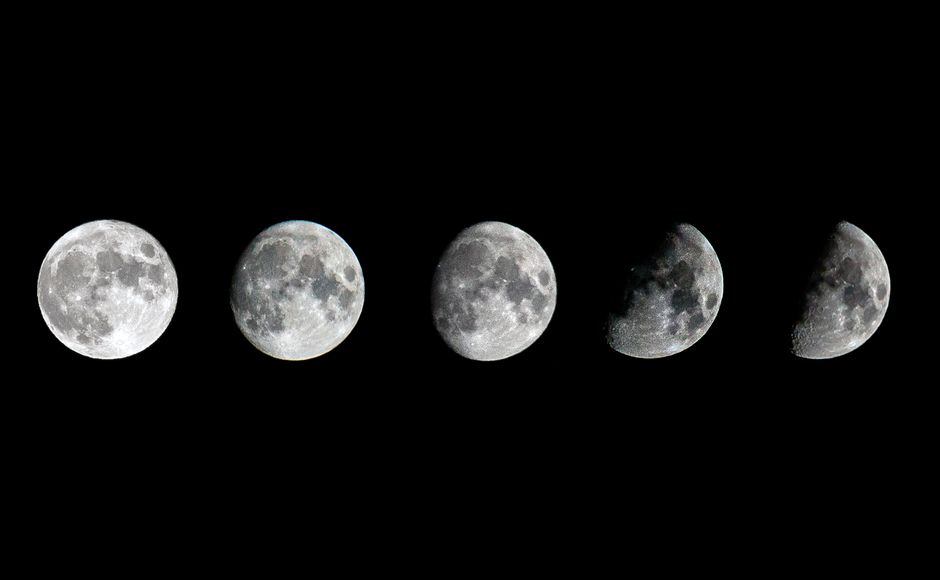
The complete lunar cycle contains eight distinct phases, each with its own characteristics. This is about recognizing that different phases can support different kinds of reflection and planning work.
The New Moon is your starting point. This is when the sky is dark and the moon is invisible to us. This phase is traditionally associated with new beginnings and fresh starts, making it a common time to set new intentions. Think of it as initiating your goals. You're saying yes to what you want to focus on.
The Waxing Crescent phase comes next. Your intention is taking shape. This is when you take action and build on your commitment.
The First Quarter Moon invites you to assess progress and work through any obstacles. This phase supports focused effort and commitment to your goals.
The Waxing Gibbous phase is about refinement. You're building toward peak energy. This is when you adjust your approach and prepare for the culmination of your cycle.
The Full Moon is the opposite of the new moon. This phase is traditionally associated with review and reflection. The moon is fully illuminated. This phase is often used for reviewing your intentions, acknowledging progress, and reflecting on what you want to release or let go of.
The Waning Gibbous, Last Quarter, and Waning Crescent phases that follow are all about reflection, integration, and preparation. You're completing the cycle, honoring what you've learned, and clearing space for the next new moon.
The Critical First Step: Setting Your New Moon Intentions
Here's the honest truth: intention setting is the foundation of all lunar cycle work. Without a clear intention, you're just watching the moon change. With one, you're creating a structured practice aligned with natural rhythms.
The new moon is a traditional time for this. The darkness mirrors a blank slate. When you sit down during a new moon to set your intentions, you're working with a natural cycle of beginning.
Start by getting quiet. Light a candle—the 🌙 Wild Woman Intention Candle Collection is designed for this ritual work. Write down three to five intentions. An intention is something you're committed to focusing on, embodying, or releasing.
Be specific. Instead of "I want to be more confident," try "I am building confidence in my creative voice by finishing my project and sharing it." The more concrete your intention, the clearer your direction becomes.
Many women find it helpful to create a focused space before setting intentions. Some use Wild Women's ritual tools like the The Power Within Ritual Oil to create a dedicated space for this work. This sensory experience anchors your commitment and signals to yourself that this moment matters.
Full Moon Ritual: Review, Reflect, and Release
Two weeks after your new moon intentions, the full moon arrives. This is when the cycle reaches its peak. Your intentions have had time to develop.
A structured full moon ritual typically follows five steps. First, gather your new moon intentions and read them aloud. Second, write down the progress you've made, no matter how small. Third, identify one thing that no longer serves your vision and name it clearly—a fear, a behavior, a belief. Fourth, ceremonially release it. Some women write it on paper and burn it. Others visualize it dissolving. Fifth, close with gratitude for the cycle and your commitment to the next phase.
The full moon is traditionally used for reflection and release. If you've been holding onto an intention that doesn't resonate anymore, the full moon offers a time to reflect on letting it go. This is not failure. This is evolution.
Creating Your Personalized Lunar Ritual Practice

The most effective moon cycle intention setting practice is the one you'll actually use. So personalize it.
Some women journal during each moon phase. Others simply light a candle and sit quietly. Some create an altar with meaningful objects. The ✨ The Power Within — Personalized Intention Jar offers another option—a tangible container for your written intentions that you can hold, see, and return to throughout the lunar cycle.
Consider adding sensory elements to your practice. Bath rituals paired with lunar work can deepen the experience. The 🌹 Wild Woman Rose & Lavender Ritual Bath Sachets- set of 2 can transform a simple bath into a ceremonial experience where you sit with your intentions, your progress, and your commitment to yourself.
Track your lunar cycles. Get a moon phase calendar or use your phone. Mark which phase you're in each day. Over time, you may notice your own patterns and preferences for different phases of the cycle.
Using Moon Phases as Natural Organizational Tools
One practical aspect of working with moon cycles is that they organize your year naturally. You get thirteen lunar cycles per year, which means thirteen opportunities to set, review, and reflect on your intentions.
Some women set different categories of intentions for different moon phases. You might set a money intention during one new moon and a relationship intention during the next. By the end of a year, you've focused on a dozen different areas of your life in a structured way.
The lunar cycle also takes the pressure off. If you miss your new moon date, you have two weeks before the full moon to recalibrate. If you fall off track during the waning moon, the next new moon is coming in days. There's always another cycle. There's always another chance to begin again.
For additional guidance on living by these cycles, Diane's Moon Letters offer reflections timed to each lunar phase. Many women use these letters alongside their own ritual practice.
Building Your Moon Cycle Intention Kit
You don't need much to begin. A journal, a pen, and your awareness are enough. But many women find that having dedicated tools deepens their practice and makes the ritual feel more meaningful.
The The Power Within Ritual Box is curated to support intention work throughout the lunar cycle. You get tools to create a consistent, grounded practice.
You might also explore The Power Within Cards, which offer daily guidance and reflection that you can use during any moon phase to clarify your intentions or reflect on what you want to release.
The combination of intention candles, ritual oils, bath tools, and journaling resources creates a complete set of options where you can practice intention setting across all eight phases. This is about creating environmental support for the internal work you're already committed to doing.
Making Moon Cycle Intention Setting Your Sustainable Practice
The value is in your consistency, your clarity, and your willingness to work with natural rhythms. The moon simply marks the time for you to pause, to plant, to review, and to release.
Start with your next new moon. Set three clear intentions. Light a candle. Write them down. Read them aloud. Then observe what happens over the next fourteen days. Pay attention to where your energy goes, what challenges arise, and what progress emerges.
When the full moon comes, sit with your journal again. Review. Acknowledge. Reflect on what to release. Then watch the cycle complete itself as the moon wanes and the sky darkens again.
After one full cycle, you'll understand why this practice appeals to many people. You'll simply want to keep going.
What's the best time to start moon cycle intention setting?
The best time is whenever you're reading this. If a new moon is coming up within the next few days, that's a natural starting point. But if you're in a different phase, start anyway. You can set intentions during any phase. The new moon is simply a traditional time for initiating new goals. If you're currently in a waxing phase, use it to build momentum toward your first full moon reflection. The cycle will reset naturally at the next new moon.
Do I need special products to practice moon cycle intention setting?
No. You need awareness, commitment, and consistency. A journal and pen are enough. However, tools like intention candles, ritual oils, and bath sachets create sensory anchors that can deepen your practice and signal to yourself that this time is dedicated to your intention work. Many women find this helps them maintain their practice long-term.
How do I know which phase the moon is in?
Use a moon phase calendar online, check your phone's weather app (most show moon phases), or search "current moon phase." You can also receive guidance timed to the lunar cycle through Diane's Moon Letters, which arrive when each new phase begins.
What if I miss my new moon or full moon date?
The moon will circle again. There are no penalties or missed opportunities. If you miss a new moon, you have two weeks until the full moon to work with what you've already set. If you miss the full moon, begin your reflection practice when you notice. The lunar cycle is cyclical by nature. Every moment is an opportunity to begin again.