
Moon Cycle Journaling for Women: A Complete Guide
Moon cycle journaling is the practice of using the lunar phases to guide your journaling and self-reflection throughout the month. Instead of writing randomly whenever you feel like it, you align your journaling practice with each moon phase—new moon, waxing moon, full moon, and waning moon. Each phase offers a different focus for reflection and intention-setting.
If you're looking for a way to structure your self-reflection while honoring the natural cycles that surround you, moon cycle journaling might be a practice worth exploring. Let's walk through what it is, how to start, and how many people use it.
In this article
What Is Moon Cycle Journaling?
Moon cycle journaling is simple: you use the four main lunar phases as prompts for different types of reflection and intention-setting throughout the month.
Related: Moon Phase Intention Setting Rituals: A Beginner's Guide
Related: Fragrant Bath Rituals for Relaxation: A Complete Guide
The practice works by using the moon's phases as a natural container for your thoughts. Each phase has a distinct focus. New Moon is about beginnings and setting intentions. Full Moon is about reflection and release. The phases in between offer opportunities to track progress and prepare for what's next.
You're not doing anything complicated here. You're just writing in a journal on specific moon dates, using prompts that match the phase you're in. Some people use a simple notebook. Others use printable moon journaling templates or guided planners that walk them through each phase.
The practice aligns with how many people approach their own self-discovery and reflection.
The Four Moon Phases and What to Journal About
Each lunar phase offers its own focus for reflection. Here's how to approach your journaling at each stage:
New Moon: Setting Intentions
The new moon is when the moon is dark and invisible in the sky. It's the beginning of the lunar cycle, and many people use this time to journal about what they want to focus on in the coming month.
- Ask yourself: What do I want to focus on? What goals or ideas am I ready to explore?
- Write about your goals, your desires, and the direction you want to move toward
- Be specific. Don't just write "I want to be happier." Write "I want to have deeper conversations with my closest friends"
- This is also a good time to journal about what you're releasing—old patterns, beliefs, or habits that no longer serve you
Many people create a small ritual around their new moon journaling. The simple act of pausing, lighting something intentional, and then writing can make the practice feel more meaningful.
Waxing Moon: Building and Momentum
Between the new moon and the full moon, the moon is growing. This is the phase for tracking progress and momentum.
- Journal about progress. What steps have you taken toward your new moon intentions?
- Write about obstacles. What's getting in your way, and how can you work with it?
- Reflect on your energy levels, your relationships, and your activities
- This is a time of growth, so ask yourself: What am I learning? How am I changing?
This phase is useful for checking in with yourself mid-month without waiting until full moon to see how things are actually going.
Full Moon: Completion and Release
The full moon is the brightest night of the lunar cycle. It's when everything is illuminated, and many people use this time for reflection, celebration, and release.
- Journal about what you've accomplished in the past two weeks
- Reflect on what you've learned about yourself
- Write about what you're ready to let go of—emotions, relationships, patterns, or beliefs
- Celebrate the wins, even the small ones
- This is a time to write about clarity. What insights are becoming clear?
Full moon journaling can feel more intense than new moon journaling. You might find yourself writing faster, feeling more emotion, or having bigger realizations. The full moon brings everything into focus, including things you might have been avoiding.
Waning Moon: Integration and Rest
After the full moon, the moon begins to shrink. This is the phase for integration, rest, and preparing for the next cycle.
- Journal about what you want to integrate from this month's lessons
- Write about what you're grateful for
- Reflect on your energy and where you might need more rest
- This is a time to slow down, not push harder
- Journal about what you want to carry forward into the next lunar cycle and what you want to leave behind
How to Start Moon Cycle Journaling
You don't need anything fancy to begin. Here's what you actually need:
- A notebook you like (even a basic one works)
- A pen
- Access to a moon phase calendar (your phone probably has this, or just Google "moon phase today")
- 15-20 minutes when you can sit quietly
Step 1: Find out what phase the moon is in today. You can check a lunar calendar online or through an app.
Step 2: Choose a prompt from the phase you're in. If it's a new moon, journal about intentions. If it's a full moon, journal about release.
Step 3: Write freely. There are no rules. You can write in complete sentences, fragments, lists, or whatever comes out.
Related: Personalized Intention Jar Manifestation: Your Complete Guide
Step 4: Notice how you feel after. Many people find that moon cycle journaling helps them see patterns and feel more intentional about their month.
If you want more structure, guided resources and ritual boxes can support your practice. Some people like having prompts written out for them, especially when they're just starting. Others prefer total freedom. Both are valid.
Tips to Make Your Moon Cycle Journaling Practice Stick
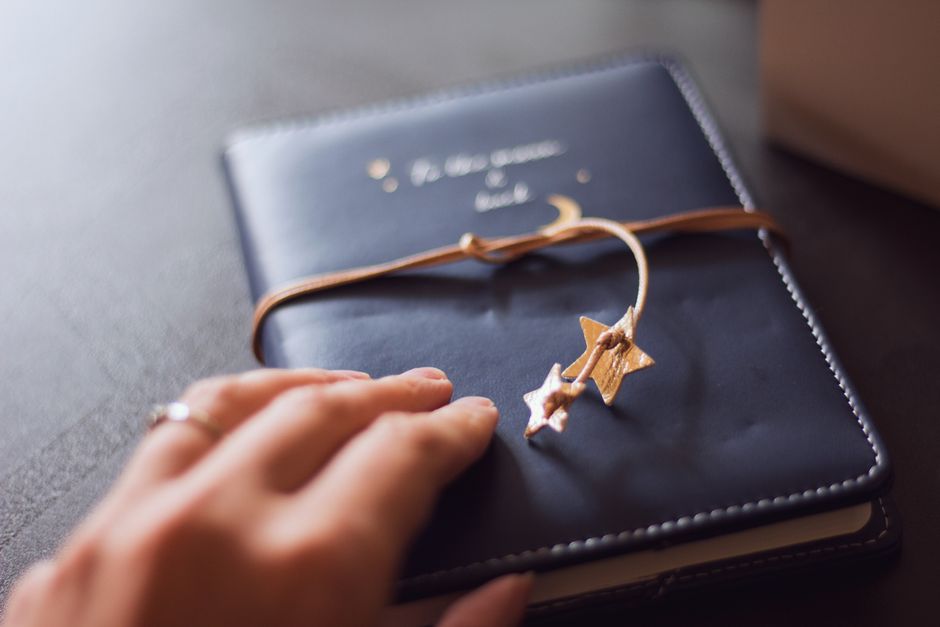
Starting a practice is one thing. Keeping it going is another. Here are some ways to make moon journaling part of your life:
- Set a phone reminder for each moon phase. It takes two seconds and it actually works.
- Create a small ritual around it. Light a candle, brew tea, sit somewhere beautiful in your home.
- Keep your journal in a visible place so you remember to write.
- Don't aim for perfection. Some months you'll write pages. Other months, three sentences is enough.
- Review old entries periodically. You'll notice patterns and growth over time.
- Join a community if you're someone who likes accountability. There are many people doing this practice, and connecting with others can make it feel less lonely.
The key is consistency, not perfection. You don't have to journal beautifully. You just have to show up.
Why Moon Cycle Journaling Matters
People's energy and focus naturally shift throughout the month. Your energy isn't the same every single day, and that's not a weakness—it's a natural rhythm. Moon cycle journaling honors this reality.
When you align your journaling with the lunar cycle, you're giving yourself permission to focus on different things at different times. You're not trying to maintain the same level of productivity all month. You're working with your natural rhythm instead of against it.
Beyond that, moon journaling creates a bridge between your inner world and the natural world around you. You start to feel less isolated. You feel part of something bigger. That sense of connection can be deeply grounding.
If you're interested in deepening this practice, various tools and resources are available to support your journaling, such as intention cards, ritual boxes, or other items designed to help you pause and reflect.
Getting Started With Intention and Ritual
Moon cycle journaling isn't just about putting pen to paper. It's about creating space in your life for reflection, intention, and honest conversation with yourself.
As you begin this practice, give yourself grace. The first month might feel awkward. You might not write for every moon phase. That's okay. You're building a habit, and habits take time.
What matters is that you're choosing to check in with yourself in rhythm with the lunar cycle. You're choosing to notice your own patterns, honor your own needs, and stay curious about who you're becoming.
That's what a reflective practice looks like. It's something you return to, again and again, knowing that each cycle brings new insights and new growth.
What if I miss a moon phase?
You don't have to journal on the exact day of each moon phase. The lunar phases build and linger for days. If you miss the new moon by a few days, you can still journal about intentions. If you miss the full moon, you can still journal about release. The cycle is forgiving, and so is your practice. Write when you can.
How long should each journaling session be?
There's no "right" length. Some people write for five minutes. Others write for an hour. What matters is that you're honest and that you show up. Even a few sentences of genuine reflection can be meaningful.
Can I use moon cycle journaling alongside other practices like meditation or tarot?
Many people combine moon cycle journaling with other self-reflection practices. You can use journaling to process what came up during meditation or to explore insights you noticed throughout the day. You're creating a practice that's uniquely yours.
What if I don't believe in the moon having energy or power?
Moon cycle journaling can work as simply a structured way to check in with yourself four times a month. The rhythm itself provides a framework for reflection and self-awareness. The structure is the benefit.