
Lunar Cycle Guided Journaling for Women: A Step-by-Step Guide
If you're looking to understand yourself better and reconnect with natural cycles, lunar cycle guided journaling might be exactly what you need. This practice involves writing prompts and reflective exercises timed to each phase of the moon. It's not complicated, and you don't need any special tools to start—just a notebook, the moon phases, and a willingness to get honest with yourself.
In this article
- What Is Lunar Cycle Guided Journaling?
- Why Women Are Drawn to This Practice
- How to Start Your Lunar Cycle Guided Journaling Practice
- What to Journal About at Each Moon Phase
- How to Track Patterns Over Time
- Creating Sacred Space for Your Lunar Journaling
- Lunar Journaling Beyond the Pages
- The Deeper Why: Connection and Self-Knowledge
What Is Lunar Cycle Guided Journaling?
Lunar cycle guided journaling combines two practices: mindful journaling and awareness of the moon's eight-phase cycle. Each phase has its own characteristics, and your journaling prompts shift to match where you are in the lunar calendar.
Related: How to Do Full Moon Release Rituals: A Step-by-Step Guide
Related: Best Intention Setting with Lunar Phases: A Beginner's Guide
Related: Moon Cycle Intention Setting Guide for Women
Related: Moon Cycle Journaling for Women: A Complete Guide
Related: Spiritual Ritual Boxes for Women: A Complete Guide
The new moon is about intention-setting and fresh starts. The waxing crescent is for building momentum. The first quarter is for taking action. The waxing gibbous is for refinement. The full moon brings clarity. The waning gibbous is for gratitude. The last quarter is for reflection. And the waning crescent is for rest.
When you journal with these phases in mind, you're creating a record of your inner world and how it shifts alongside the lunar cycle.
Why Women Are Drawn to This Practice
Many women feel a connection to lunar cycles and find journaling with the moon helps them become more aware of natural rhythms.
This practice is also deeply personal. Unlike tarot or astrology, which can feel mystical or complex, lunar journaling is straightforward: you write, you reflect, you notice patterns. Over time, you might discover that certain emotions surface at specific moon phases, or that you experience different energy levels during different lunar phases.
The beauty of lunar cycle guided journaling is that it's flexible. You're not trying to manifest anything specific or follow someone else's rules—you're just tuning in to yourself and the natural world. It's a ritual that Wild Women has seen support women's self-reflection and intention-setting.
How to Start Your Lunar Cycle Guided Journaling Practice
Step 1: Get a lunar calendar. Grab a 2026 moon phase journal, check a lunar calendar online, or follow the moon phases on your phone. You need to know where you are in the eight-phase cycle so your prompts align with each phase.
Step 2: Choose your journaling format. You can use a dedicated notebook, a journal app, or even voice recordings. Pick whatever feels natural to you. Some women love the tactile experience of pen and paper, while others prefer typing. Honor your preference.
Step 3: Find prompts that resonate. Each moon phase has different journaling themes. For example, during the new moon, you might journal on questions like: What am I ready to begin? What intentions feel true right now? During the full moon, you might ask: What's become clearer this cycle? What am I ready to release?
Step 4: Set a ritual around your journaling. Light a candle. Pour tea. Sit somewhere quiet. Make it feel intentional. This doesn't have to be expensive or elaborate—even five minutes of intentional space around your writing can shift the experience. Many women find that pairing journaling with bath sachets or a grounding oil creates a deeper sense of ritual.
Step 5: Write freely and without judgment. There's no "right way" to do this. Some entries will be a page long. Others will be three sentences. Some will be messy and emotional. That's the entire point. You're not writing for anyone else—this is your conversation with yourself.
What to Journal About at Each Moon Phase
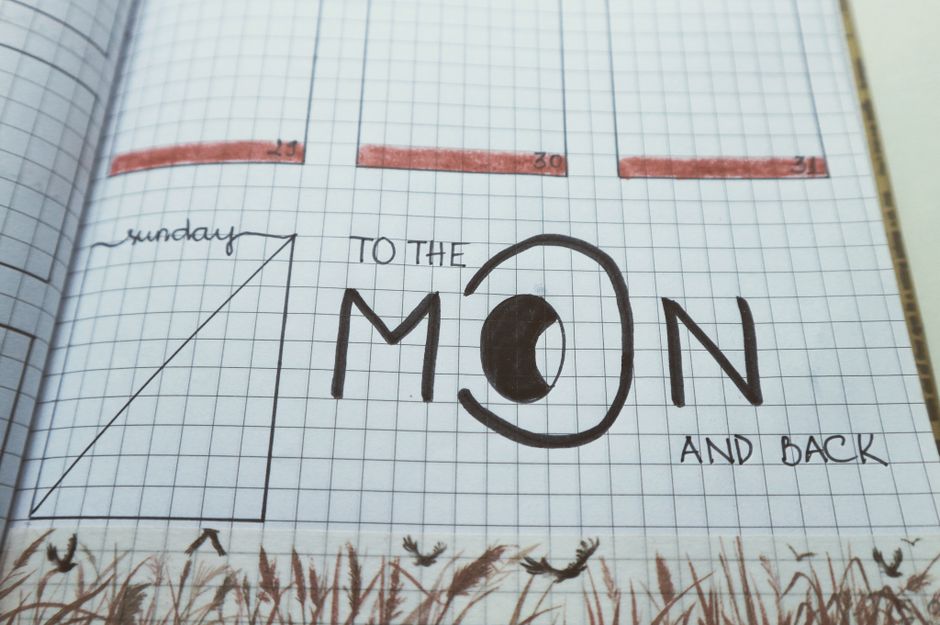
New Moon (New Beginnings): This is your starting point. Journal about what you want to plant, create, or begin. What feels possible right now? What are you ready to commit to?
Waxing Crescent (Building Energy): You're gaining momentum. Write about small wins, things you're grateful for, and how your initial intentions are taking shape.
First Quarter (Action & Challenges): Obstacles might show up. Journal about what's working, what needs adjustment, and how you're showing up for your goals.
Waxing Gibbous (Refinement): Get specific. Write about what's being revealed, what you're learning, and how you're evolving.
Full Moon (Clarity): The full moon is a time of illumination. Journal about what's become visible, what you're grateful for, and what you're ready to let go of. This is a moment for honest reflection.
Waning Gibbous (Integration): Journal about wisdom you're integrating, shifts you're noticing, and gratitude for the cycle so far.
Last Quarter (Reflection): Review and reflect. Write about what didn't serve you, lessons learned, and what you're choosing to leave behind.
Waning Crescent (Rest): Your cycle is closing. Journal about rest, restoration, and what you're ready to let dissolve before the next new moon arrives.
How to Track Patterns Over Time
One of the valuable parts of lunar journaling is noticing what patterns emerge. After three to six months, you'll likely see themes repeating at certain moon phases.
Maybe you notice different energy levels during waxing versus waning phases. Maybe certain emotions or insights surface at the full moon. These observations can help you understand your own rhythms.
Keep your entries together so you can flip back and compare. If you journaled about a particular emotion during last month's full moon and this month too, you've discovered something about your cycle. Once you see the pattern, you can plan around it. You might schedule important activities during phases when you notice different energy, or protect your rest time during other phases.
This kind of self-awareness is valuable, and it's why so many women return to this practice year after year. If you're ready to deepen your journaling ritual, Wild Women offers tools and intention cards designed to support reflective practices.
Creating Sacred Space for Your Lunar Journaling
Your environment matters. You don't need much, but intentional space helps. A quiet corner, natural light if possible, and maybe something beautiful nearby—a plant, a candle, a crystal you love.
Many women create a small ritual to mark the transition into journaling time. This could be lighting a candle, brewing tea, or using The Power Within Ritual Oil on your pulse points. These sensory cues can signal that it's time to slow down and turn inward.
The goal isn't perfection—it's permission. Permission to be honest, to feel whatever comes up, and to honor your own rhythm.
Lunar Journaling Beyond the Pages

While journaling is the primary practice, many women extend their lunar awareness into other rituals. You might set intentions using The Power Within Cards, which complement journaling. Or you might pair your new moon reflections with a The Power Within Ritual Box that includes items you can use to create a ceremonial experience around your practice.
The point is to make this practice yours. Some women journal daily, others only on new and full moons. Some write paragraphs, others sketch or use bullet points. The "right way" is whatever keeps you showing up and staying honest with yourself.
The Deeper Why: Connection and Self-Knowledge
Lunar cycle guided journaling works because it reconnects you with natural cycles. When you journal with intention and awareness, you're creating a dialogue with your own observations and reflections. You're noticing what's true for you, not what you think should be true. You're honoring your complexity and your rhythms.
This is self-knowledge, and self-knowledge supports the choices you make—about relationships, work, rest, and how you move through the world.
What supplies do I need to start lunar cycle guided journaling?
You really only need a notebook and a way to track moon phases. A lunar calendar, moon phase app, or even writing down the dates of new and full moons works perfectly. Everything else—candles, oils, fancy journals—is optional and comes later if it feels right to you.
Can I journal on days other than the exact moon phase day?
Absolutely. You can journal within a day or two of the phase and still engage with the practice. Honor what works for your schedule.
What if I miss a moon phase?
Skip it and keep going. This isn't about perfectionism or guilt. Life happens. You'll catch the next phase, and that's completely enough. The practice meets you where you are.
How long does it take to see patterns in lunar journaling?
Most people start noticing patterns within three to six months of consistent journaling. Some insights show up faster, others take longer. The key is patience and regular practice. Give yourself at least one full lunar year (13 cycles) before deciding if this is truly working for you.